The honest calorie counter
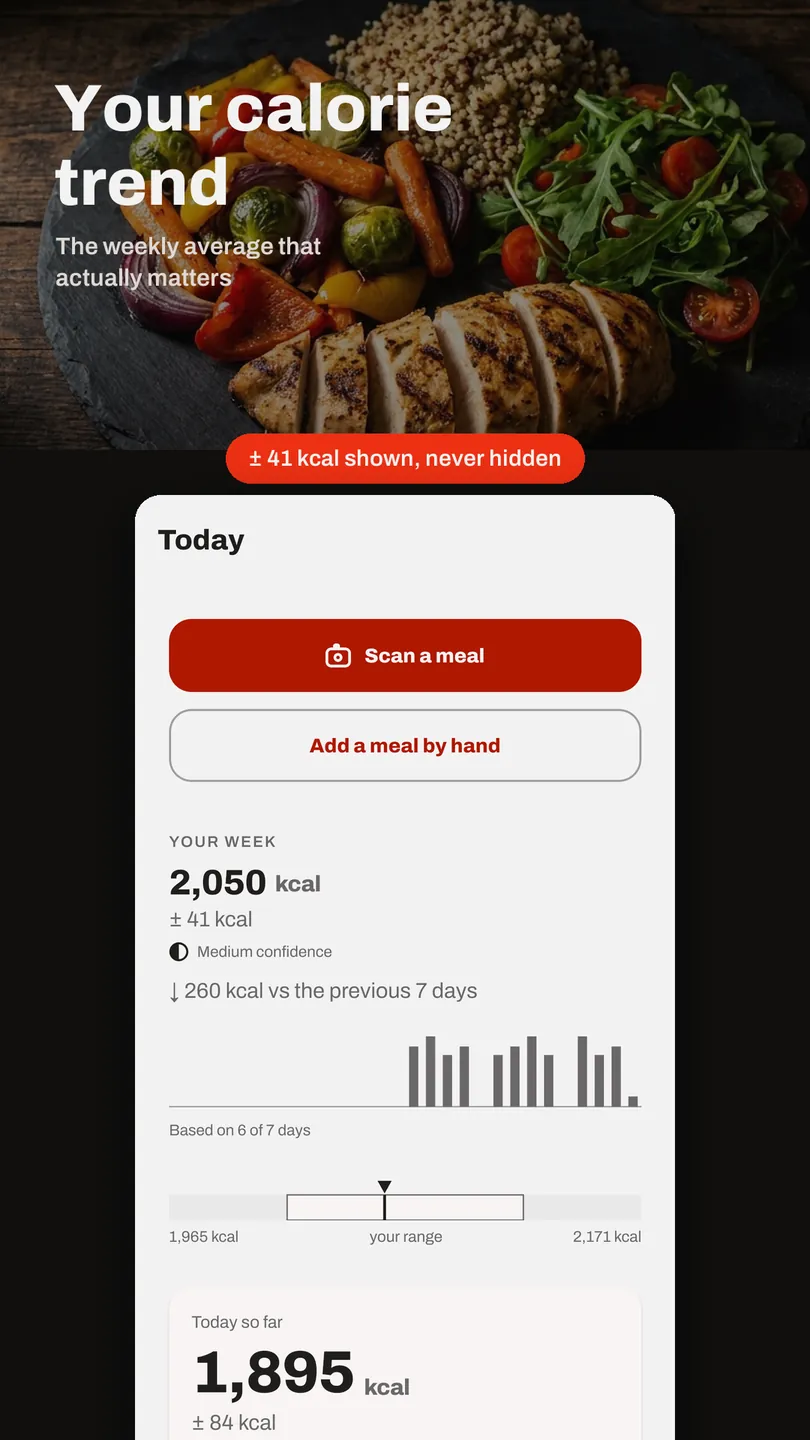
Every other calorie counter gives you a confident number. We give you the range.
Estimating a meal from a photo is never exact — not here, not anywhere. So Munch Metrics shows you the uncertainty instead of hiding it, and puts your weekly trend front and centre, where the signal actually is.
 Coming soon for
iOS
Coming soon for
iOS
Out now on Android. iOS to follow.
Why Munch Metrics is different
Shown, not buried
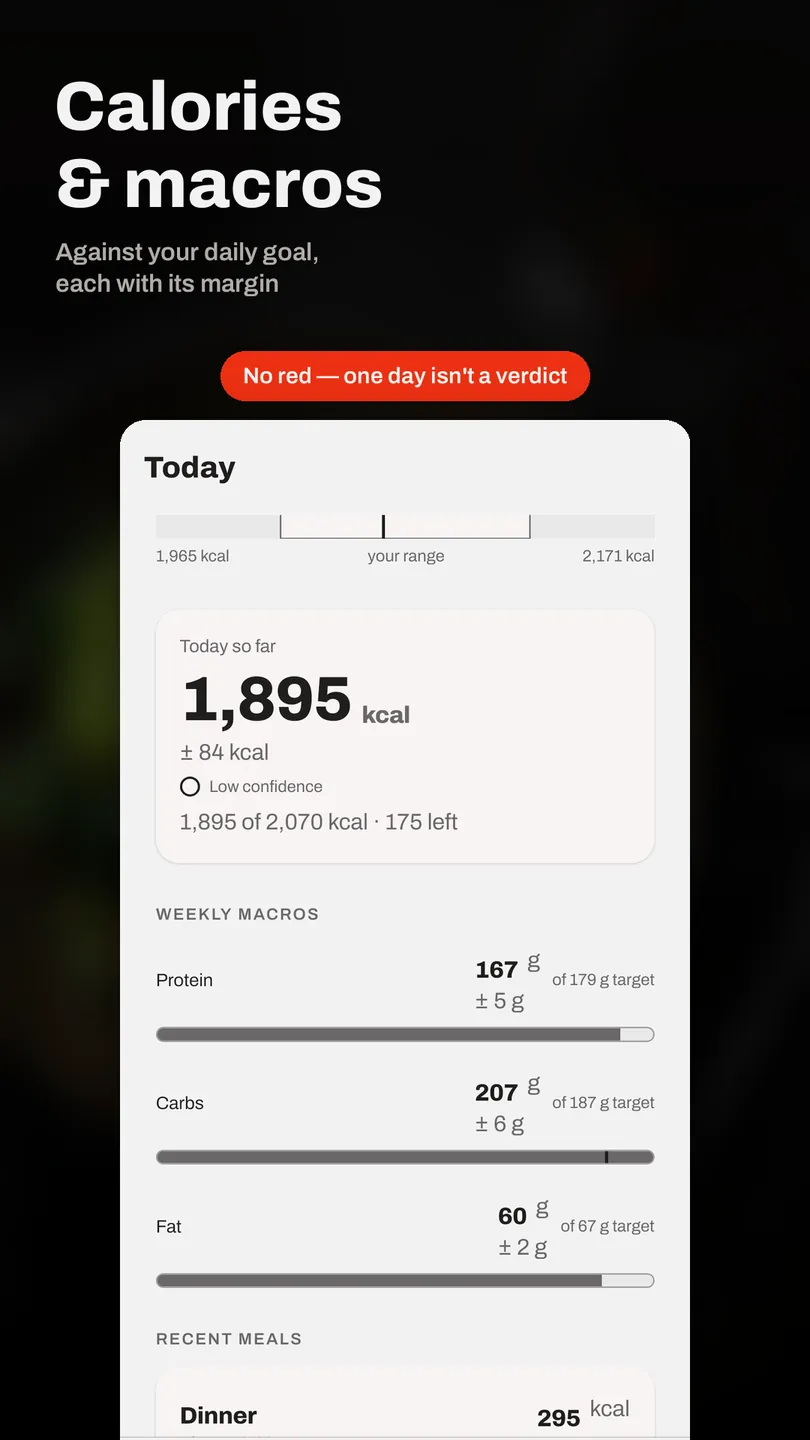
Every estimate carries its margin. A wide range is information, not a defect — it tells you when to look twice.
The number to trust
Daily totals bounce around for reasons that have nothing to do with you. The weekly trend is what we lead with.
Nothing watching you
No analytics SDK, no advertising IDs, no data brokers. Meal photos are deleted the moment they've been read.
How it works
Photograph the plate, check what it found, save. The checking step is the point — you know what you ate better than any model does.
Photograph it, or scan the barcode
A photo breaks the meal into ingredients rather than guessing one total, and itemises the oil and butter most apps quietly leave out. Packaged? Scan the barcode instead and take the numbers straight off the label.
Add the rest of the plate
Scan barcodes one after another, or photograph foods one at a time — each is added to the same meal. Review once at the end instead of once per item.
Fix the portion, in your units
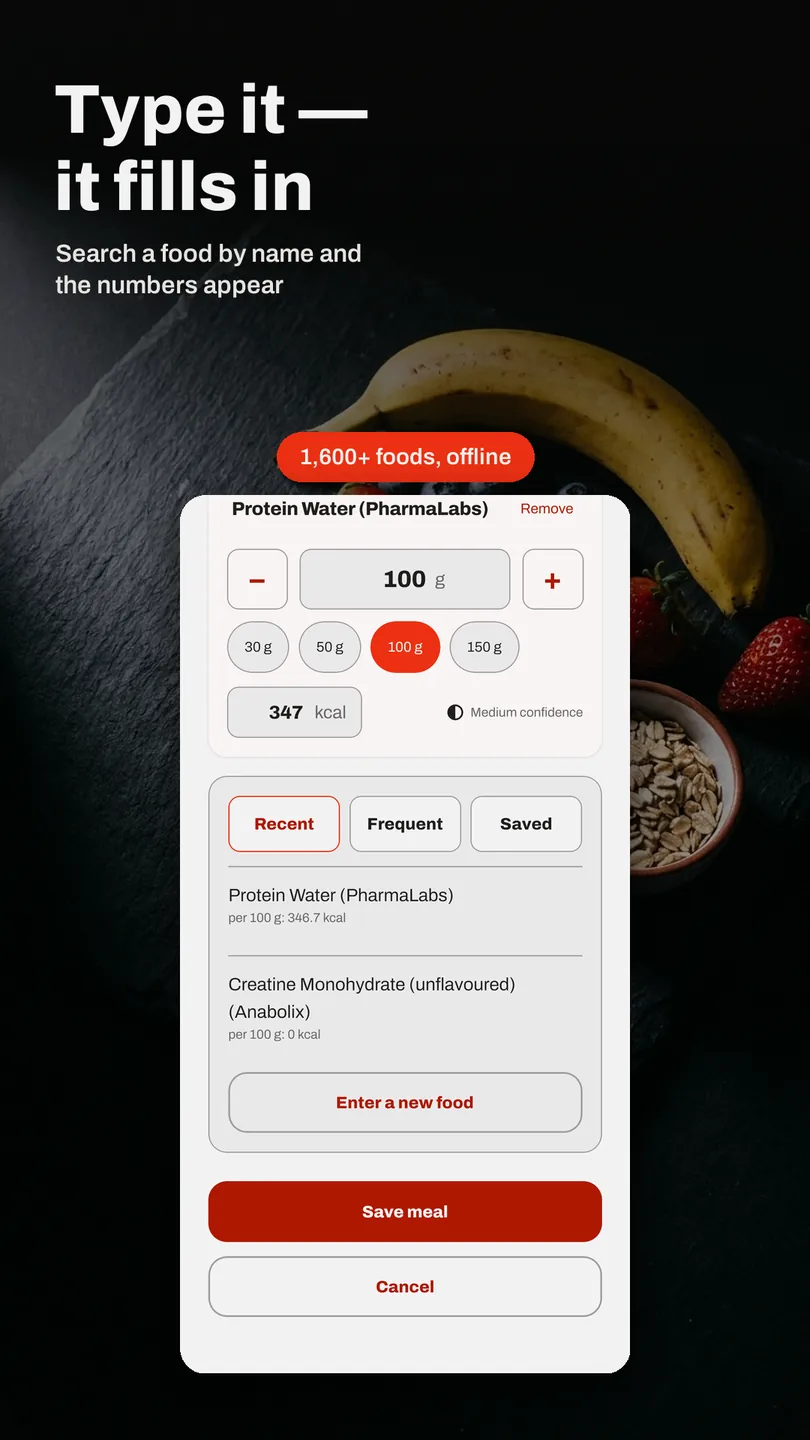
Two bars, not sixty grams — where the pack states a serving, that's what you tap. Correct your porridge to 150 g once and it's your usual portion from then on.
Why we show the range
Published error rates for photo-based food estimation sit around 20–30% for a mixed plate, and worse for anything sauced or layered. That's the honest state of the technology — including ours.
An app that reports “612 kcal” for that plate isn't more accurate than one reporting “610 ± 140”. It's the same estimate with the uncertainty removed to look authoritative.
Hiding it has a cost: you end up making decisions on a number that was never that precise, and blaming yourself when the maths doesn't line up. We'd rather show the range and point you at the weekly trend, which is accurate enough to act on.
The rest of it
Things that sound small until you're logging a meal at a restaurant table with one hand.
Barcodes, honestly
Scan a pack and the numbers come off the label. When a product isn't in the database it says so plainly and leaves the shutter live — it never becomes a dead end you have to back out of.
Portions in pack units
“2 bars” beats “60 g”, because that's how you ate it. One tap sets it; the number stays editable if you had half.
The time you ate, not the time you typed
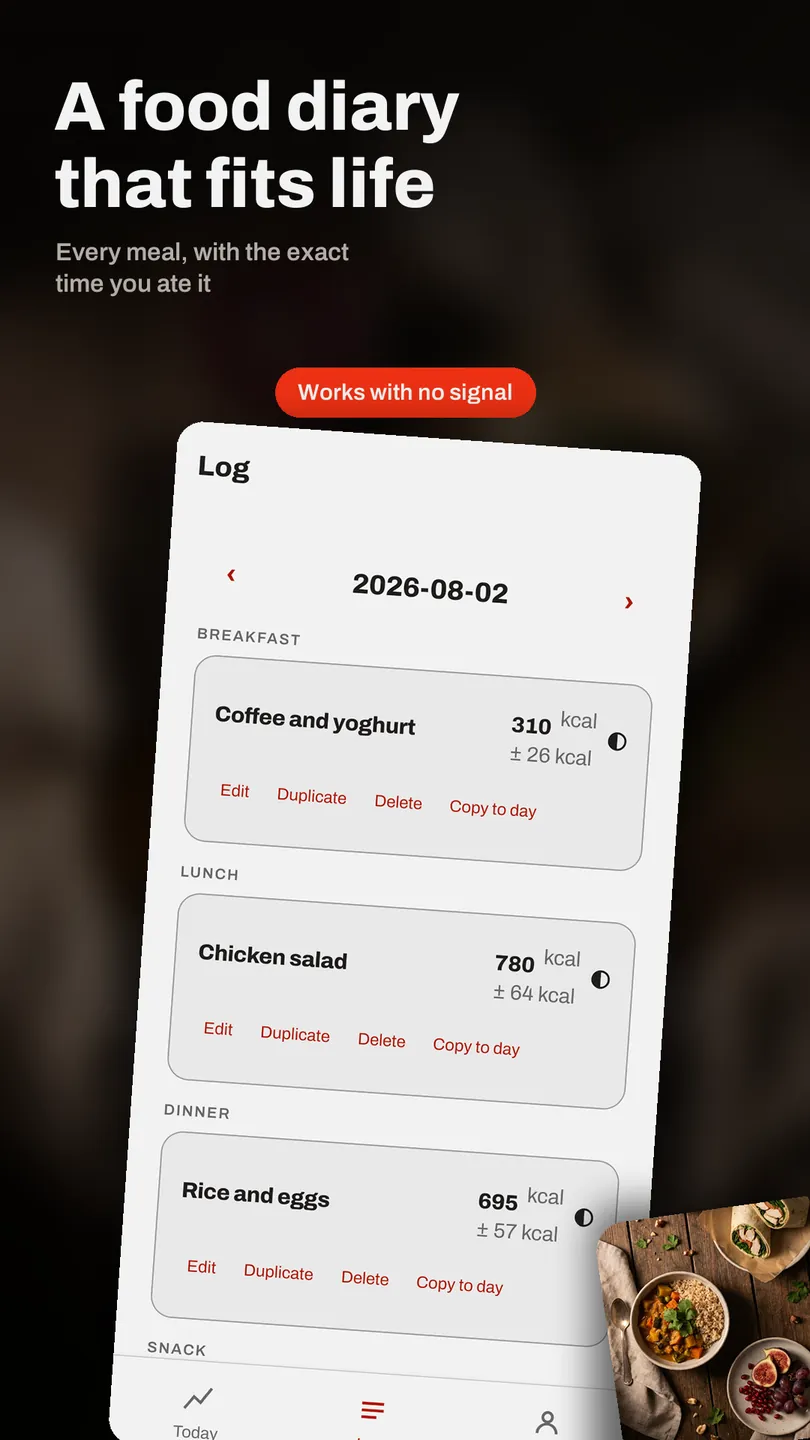
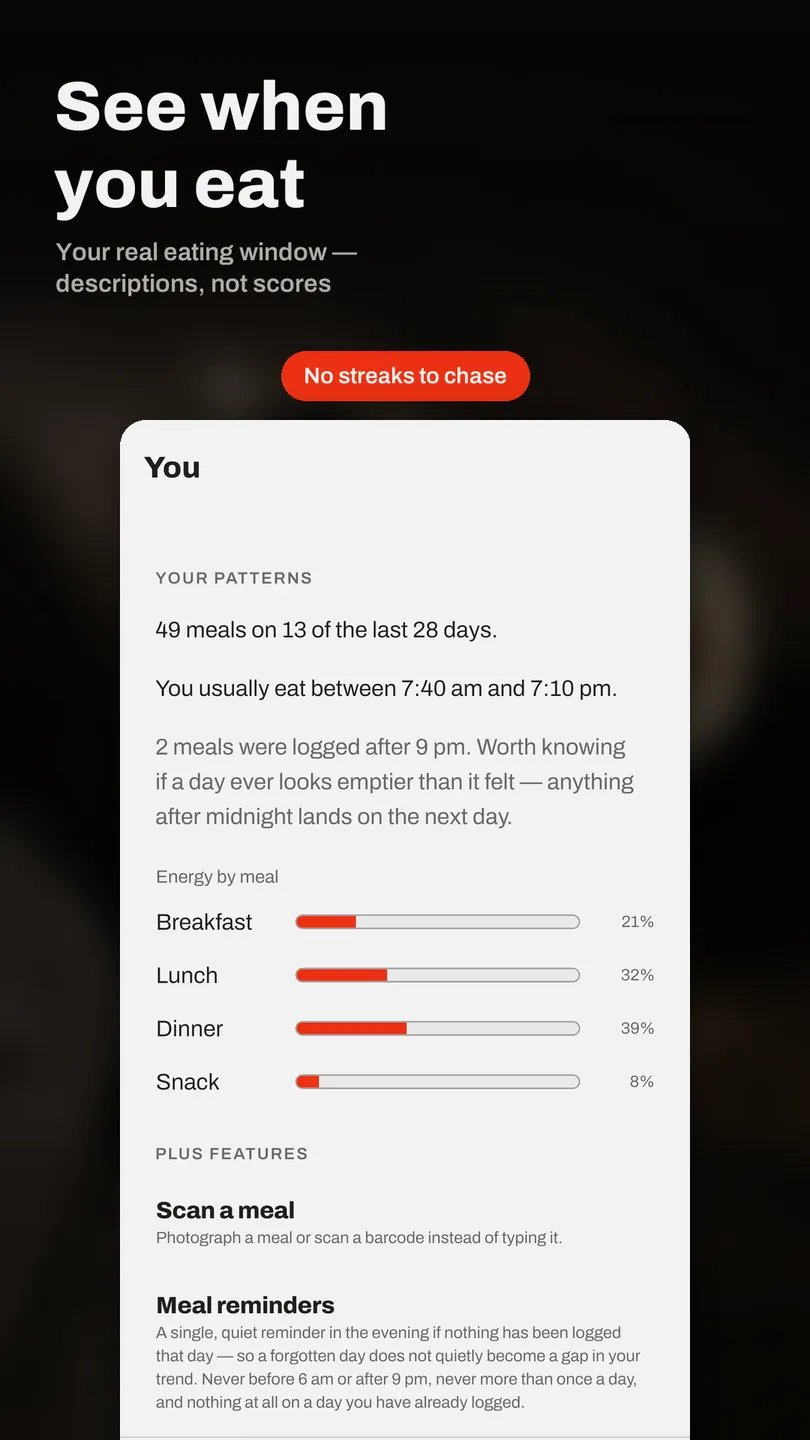
Log breakfast at eleven and it's still breakfast. Every meal carries an editable time, which is what makes the eating-window figures mean anything.
One reminder, or none
Off by default. Switched on, it's a single evening nudge if nothing's been logged — never before 6 am or after 9 pm, never twice, and nothing at all on a day you've already logged.
Works with no signal
Everything is written to the phone first. Scans taken offline queue up and analyse themselves when you're back — the photo is never lost.
Sign in, or sign out
A one-time email code, or your Google account. Signing out clears this device's copy, so handing your phone over doesn't hand over your food diary.
What's free, and what isn't
Scanning is the paid part. Everything you've already logged stays yours whatever you decide.
Free, permanently
Free — no trial, no expiry, no card
- Log meals by hand, with your own saved foods
- Your weekly trend, daily goal, target band and full history
- When you eat: your usual window and the split across meals
- Repeat yesterday, duplicate, copy to another day
- Export everything as CSV or JSON, whenever you like
- Delete your account and all of it, from inside the app
Plus
Subscription — price shown in-app before you start
- Photograph a meal instead of typing it
- Barcode scanning, with portions in pack units
- Itemised ingredients with per-item confidence
- The optional evening reminder, off until you turn it on
- A free trial, with a reminder 48 hours before it converts
- Cancel in the store in the same few taps it took to start
If a real price can't be loaded from the store, the buttons stay switched off rather than showing you a made-up number.
Built to be put down
A food diary that becomes a compulsion has stopped helping. A few decisions follow from that.
No streaks, no scolding
Nothing punishes you for a missed day, and no screen turns red because a number went over.
A safety floor on targets
Targets are clamped to a sustainable range, and the app tells you plainly when it has adjusted what you asked for.
You can hide the numbers
One switch turns off every calorie and macro while keeping the log and the timeline. Under-18s get this by default.